
When I relocated to Brazil, I noticed something unexpected: a mental weight I hadn’t fully acknowledged suddenly lifted.
Not the obvious stresses of daily life, but something deeper — the low-grade tension that comes from having all your options concentrated in one geographic basket.
The Geography of Resilience
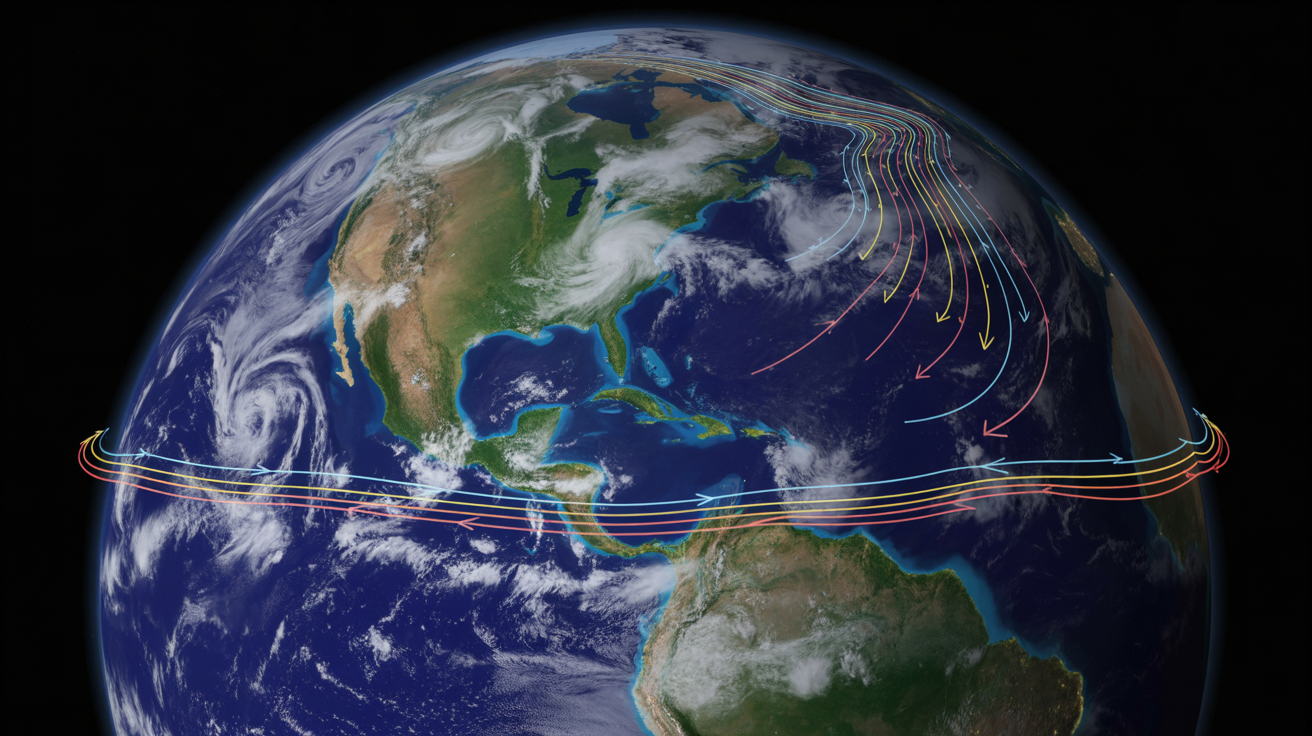
There’s a meteorological reality that doesn’t make headlines but matters profoundly for long-term planning: atmospheric circulation patterns create a natural barrier between hemispheres.
The Intertropical Convergence Zone (ITCZ) — where trade winds meet near the equator — generates powerful vertical air currents that limit cross-hemisphere mixing.
In scenarios involving atmospheric contamination, whether from industrial accidents, wildfires, or worse, this creates a measurable dispersion differential between north and south.
Raising Children in the Southern Hemisphere
So raising children in the Southern Hemisphere feels different. The pace is slower, the air cleaner, and the social rhythms less transactional. You notice the shift in your family before you can explain it logically — evenings that stretch longer, community that feels tangible, and kids who spend more time barefoot than behind screens.
That sense of psychological space — the absence of constant geopolitical tension — changes how your children grow up. They experience freedom not as a slogan but as a lived reality.
They learn languages that connect continents, not divide them. They see opportunity as global, not national. And they develop a calm confidence that comes from knowing their home base isn’t precariously tied to one country’s fate.
That’s the quiet reward of Flag Theory most people miss: the peace that comes from watching your kids grow up with less fear and more world.
The Flag Theory Framework
The wealthy have practiced geographic diversification for generations — maintaining homes, businesses, and legal ties across multiple jurisdictions.
What’s changed is accessibility.
Modern remote work, streamlined residency programs, and digital infrastructure mean these strategies are no longer exclusive to the ultra-wealthy.
Middle-class professionals can now implement the same multi-jurisdictional frameworks that were once reserved for those with family offices.
The question isn’t whether to diversify geographically — it’s whether to do it proactively or wait until windows of opportunity close.
Timing and Access
Several Southern Hemisphere countries currently offer residency pathways with relatively straightforward requirements.
Like all policy windows, these evolve.
Singapore’s trajectory — from accessible to exclusive — took just fifteen years.
The families who moved early weren’t more paranoid.
They simply recognized that optionality compounds — and that the best time to arrange alternatives is when you don’t desperately need them.
Ready to Explore Your Options?
Join our Flag Theory Webinar to learn which jurisdictions offer the strongest combination of stability, accessibility, and strategic advantage — and how to move from interest to legal residency within weeks, not years.