
You’ve read about flag theory. You’re curious about world schooling. Maybe you’re planning a second hub or exploring Plan B options.
But there’s one question that stops most families before they even start: “Is it actually safe?”
I’m writing this because safety is the most important factor when traveling with your family — and it’s the one thing you can’t compromise on. Here’s how to think about it practically, not theoretically.
The Safety Paradox Nobody Talks About
Before we had kids, I felt more unsafe walking around San Francisco than I ever have in supposedly “dangerous” parts of Latin America.
That tells you something important: your media-fed perception of danger and actual safety while traveling abroad are often completely different things.
But here’s what matters more — all the places we end up in are safe and happy places. We never give safety the benefit of the doubt if we aren’t sure.
If you’re not comfortable from what you’ve researched, just don’t go. Simple as that.
Do Your Research — But Know How to Filter
When it comes to family travel safety, I mentally filter some countries out before I even research them.
Will I miss a few incredible destinations? Probably. But safety is not something I’ll compromise on when traveling with kids.
There are plenty of travel bloggers and online resources to lean on. Just be careful — some are solo backpackers, not parents hauling gear and managing three kids with different needs. The logistics are completely different.
We’ve learned a lot about what actually works when traveling internationally with children. If you have questions about the practical side of it, drop a comment — I’ll cover it in a future post.
Communication Is Non-Negotiable
Make sure every adult on the trip has a working phone and a stable connection.
There are plenty of affordable SIM cards that work internationally — just research what’s most commonly used in that country. For example, in Latin America, WhatsApp is everything. Even some government offices use it for communication.
If you don’t have WhatsApp set up and working, you’re missing the main channel locals rely on.
And this isn’t just about emergencies — it’s about navigating daily life, staying connected as a family, and having the ability to call for help if needed.
Trust Your Intuition — And Look for the Right Signals
If an area doesn’t feel right — leave.
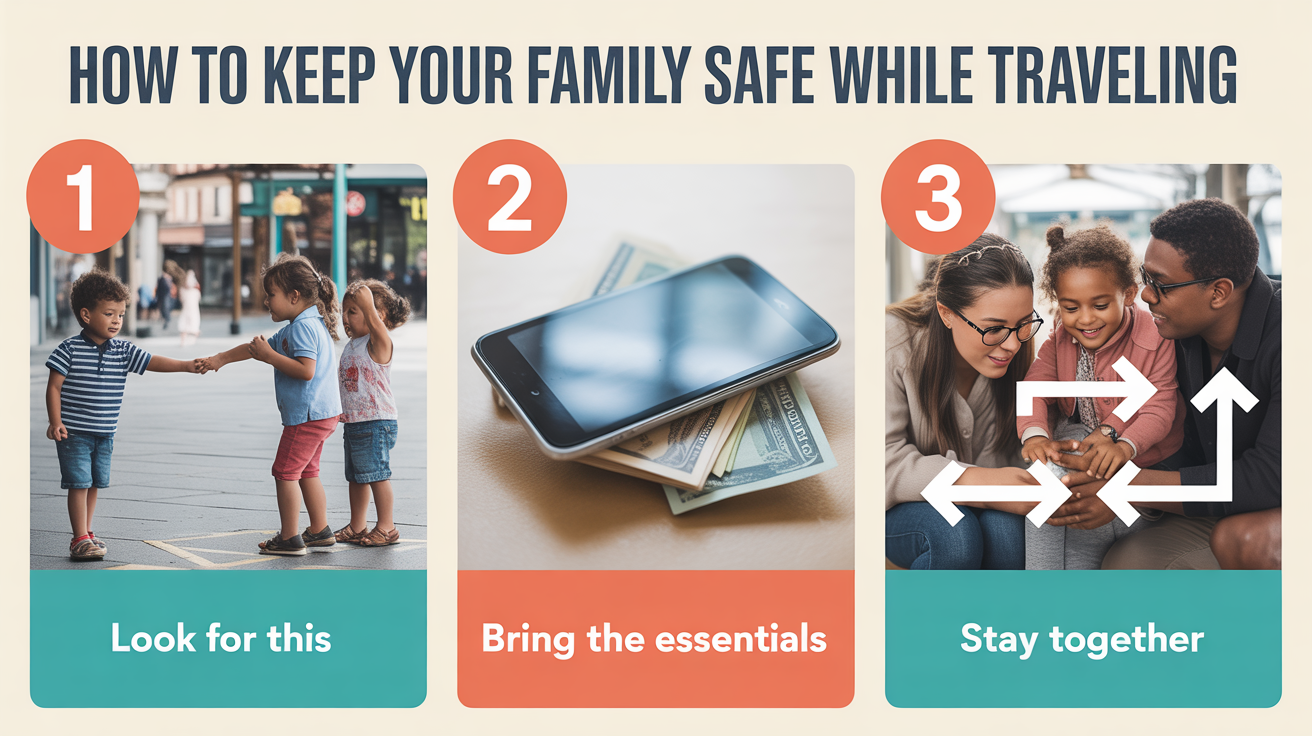
The key indicator for family safety abroad is simple: Are there kids happily playing outside, and do the parents look relaxed when they see you?
If yes, you’re probably fine.
If no — move on.
Your intuition, combined with what you can observe, is your best family safety tool when traveling abroad.
Stick With Trusted Family Destinations First
For your first few international trips, don’t waste energy dodging petty scams or worrying about logistics.
Start with safe destinations for families — places that are well-established, where other traveling families already live and the infrastructure works smoothly.
- Florianópolis, Brazil
- Mérida and Querétaro, Mexico
- Las Condes in Santiago, Chile
- Dubai, UAE
These aren’t the only options, but they’re solid first steps — easy to navigate, comfortable for families, and filled with people who understand what it means to live internationally with kids.
Once you know how to travel confidently as a family, you can venture further.
Have Cash as a Backup
These days, I hard have to use local cash even when going to the so called “developing” nations. You can certainly carry some cash for those places and informal vendors that don’t accepts cards.
The tip here is to ask and agree to the terms before you buy something, like a savvy traveler 🙂
I prefer credit cards since there as most come with fraud protection. Just be sure to make sure it doesn’t get compromised through those small, and probably sketchy shops, but you probably be there in the first place if you followed the tip from above: research first.
The Teaching Moment Nobody Talks About
Learning to navigate the world is a lesson for both kids and adults.
When we’re in a new place, I always keep the kids in sight until we understand how things work. Crowded areas or unfamiliar routines? We ease in slowly.
This isn’t just about protection — it’s also a teaching moment. Kids learn why safety matters and how to stay aware without fear.
Instead of barking orders, I’ll say, “We’re new here, so we’re staying together until we get a feel for how things flow.” They get it. And over time, they start to recognize those cues themselves — reading situations, understanding environments, and developing judgment.
That’s a skill they’ll carry for life.
Start Small, Build Up
The biggest hurdle for most families is getting comfortable with the basics.
Start small — take a road trip. See how your family functions when routines change and things don’t go as planned.
Then level up: a short international trip, maybe a week nearby. Then two weeks somewhere further.
The families who create the richest experiences are the ones who start small and learn as they go.
If your “why” is strong enough, you’ll always figure out the “how.”
The Bottom Line
Family travel safety abroad isn’t about avoiding all risk — it’s about managing it wisely.
Do your research. Stay connected. Trust your intuition. Start with proven destinations. Keep cash handy. And use every trip as a chance to teach your kids how to read the world.
You don’t need to be reckless — but you also don’t need to stay home out of fear.
The world is far safer, friendlier, and more accessible for families than most people realize. You just need to know what to look for.
If you’re planning your first trip or want help with logistics, send me an email at Mike@TotalFreedom.io or drop a comment below with your questions.